Your First Club Visit: What to Notice Before You Join
A first club visit checklist helps you notice the welcome, session rhythm and practical details before deciding whether a club feels right for you.

The most common mistake on a first club visit is deciding from one friendly greeting—or one awkward moment—and leaving without noticing how the whole session works. A first club visit checklist gives you a steadier way to judge the welcome, the rhythm and the questions that matter before you join.
You do not need to assess a club like an inspector. Go to watch, take part if invited, and notice what makes the experience easier or harder for you. The useful clues are often ordinary: where newcomers wait, how people explain a drill, and whether anyone checks that you know what happens next.
Does the welcome help you find your feet?
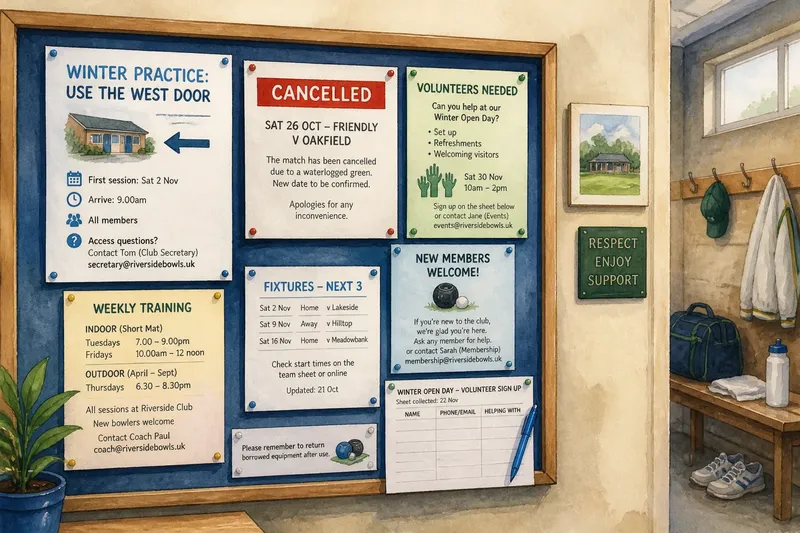
Notice what happens between arriving and joining in. Is there an obvious place to go, or do you have to guess whether to enter the changing room, wait by the entrance or walk across to the group? A small amount of uncertainty is normal at an unfamiliar venue. What matters is whether there is a reasonable way to get oriented.
Look for a named contact, a coach who acknowledges you, or a member who can point you towards the right place. The person greeting you need not be effusive. A clear introduction and a simple explanation of what to do next can be more useful than a long chat.
Also notice how the group treats people who arrive late, ask for clarification or seem unsure. Do members make room, repeat an instruction or point out where spare equipment is kept? These everyday responses suggest what it may feel like to learn there, not just what the club says about itself.
- Arrival: Can you tell where a first-time visitor should go?
- Introduction: Does someone explain who is leading and how to join the session?
- Names: Do people make an effort to include you in conversation without putting you on the spot?
- Questions: Can you ask for directions or clarification without feeling that you are interrupting?
- Access: Are entrances, toilets, changing areas and viewing spots easy to locate?
Keep your own comfort in view. Some people like a lively greeting; others would rather be shown where to stand and given time to settle. A club need not match every preference, but you should be able to identify whether the welcome suits the way you prefer to enter a new group.
Can you follow the session rhythm?
A session has a pattern, even when nobody announces it. There may be a warm-up, a skills exercise, a game and a brief chat at the end. Watch how one part leads into the next. If you are joining a sport with unfamiliar rules, the transitions can tell you more about the experience than the technical details of a single drill.
Notice whether instructions are given before people move, and whether newcomers can see or hear them. A good session may be energetic and noisy; the practical question is whether you can work out what is expected of you. If the group splits into smaller activities, see whether someone explains where a new participant should go.
Pay attention to the pace. Do people get a moment to collect equipment or ask a question, or does the next activity begin before they can catch up? A brisk pace can be part of the sport. It is still useful to know if the session offers a way to pause, observe or ask for an alternative when you need one.
Imagine you arrive at a badminton club with little recent experience. The coach explains that the first activity is a short rallying exercise, then pairs people by comfort level. You are invited to watch one round before choosing a partner. That sequence gives you a chance to understand the task and decide how much to join in; it is a clearer signal than simply being handed a racquet and pointed towards a court.
Do not confuse a quiet first visit with a poor fit. You may be concentrating on where to stand, remembering names or learning the rules. Instead, ask yourself whether the session gives you a fair chance to understand what is going on, and whether the next visit might feel more familiar.
What details should you check before deciding?
Small practical details can shape whether you can attend regularly. Find out where the session meets, what time participants are expected to arrive, and what happens if weather or venue availability changes the plan. If the club uses an app, email list or group message for updates, ask how a new member gets access.
Ask what you need for the next session. Some clubs can lend equipment for a trial; others expect you to bring suitable shoes or clothing. If you have a particular access need, injury concern or question about adapting an activity, raise it privately with the coach or organiser. For health or safety concerns, seek advice from a qualified professional as appropriate, and follow the club’s and equipment maker’s guidance.
It can help to ask one question at a time rather than trying to settle every detail at the door. For example: “If I come again, where should I meet the group?” is direct and easy to answer. If the answer is unclear, ask who would be the best person to contact later.
- Session format: Is the visit mainly for beginners, mixed abilities or experienced participants?
- Equipment: What can you borrow, and what should you bring yourself?
- Attendance: Do you need to book, message someone or simply turn up?
- Updates: How are cancellations or venue changes communicated?
- Costs and membership: What does a trial involve, and when would you need to decide about joining?
Where an answer depends on a club policy, equipment label, manufacturer instructions or local rules, check that source directly rather than relying on a guess. You do not need to resolve every point during your first visit, but knowing which details remain open makes it easier to decide what to ask next.
Which questions are worth asking after a first visit?
Can I come back for another trial session?
Ask whether another visit is possible and whether you should contact someone before arriving. A second session can help you see whether the first-day uncertainty fades once you know the route, faces and basic routine.
How are beginners included in regular sessions?
Ask how the club handles different experience levels, such as separate groups, adapted drills or coaching within a mixed session. Listen for a practical description of what you would actually do, rather than relying only on a broad label such as “all abilities”.
Who should I contact if I have a question later?
Get the name or role of the right person and the preferred way to reach them. This is especially useful if the coach is busy at the end of a session or if you think of a question after you leave.
What would I need to decide before joining?
Ask about the next commitment, any forms and whether there is a trial period. You can then take time to consider the practical arrangements instead of feeling obliged to make a decision while everyone is packing up.
How can you tell whether the club suits you?
Separate what you observed from what you assumed. “Nobody spoke to me” is an observation; “they do not want new members” is an interpretation. There may be a simple explanation, such as the coach managing a busy session. If the detail matters to you, ask at a later visit rather than filling in the gap yourself.
Think about your own reasons for trying the club. Perhaps you want regular coaching, a relaxed social activity, a chance to compete or simply a new routine. Then consider whether the session you saw appears to support that aim. A welcoming room is not enough if the activity is at the wrong level or the timing will not work for you.
After you leave, jot down a few brief notes while the details are fresh. You might record where you felt at ease, what you still do not understand and what you would like to ask next time. Keep the notes specific: “the coach showed me the court entrance” is more useful than “nice atmosphere”.
Your first club visit checklist is there to help you notice, not to produce a perfect score. If the welcome was clear, the session made sense and the practical arrangements seem manageable, you may have enough reason to return. If something felt off, identify the exact moment and decide whether a question or another visit could clarify it. A good decision can be simply to wait, ask for more information or try a different club.