The Kit Bag That Carries More Than Kit
See how a kit bag can organise clean and used gear, protect belongings on the journey and make the small routines around a sports session easier.
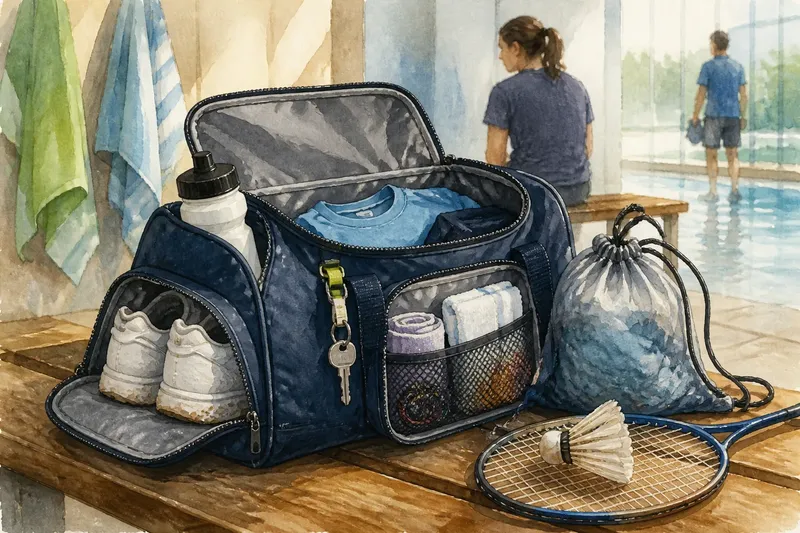
The common mistake is to leave used kit loose beside clean clothes, then hope everything will be fine on the journey home. A damp towel or muddy trainers can soil other belongings, while a bag with no clear places for essentials can turn changing into a rummage. A kit bag works best when it separates what you need before play from what needs attention afterwards.
Compartments are not just a sign of how much gear someone owns. They can mark the small transitions around a session: leaving home, changing at the leisure centre and unpacking when you return. A simple arrangement is often enough.
Why does a kit bag need separate compartments?
Separate spaces make it easier to keep shoes away from a clean shirt, a water bottle upright and a locker key within reach. They also clarify what happens next: clean items stay ready to use, while worn or damp ones are easy to spot and remove.
The right layout depends on the activity. A swimmer may want goggles and a towel near the opening; a tennis player needs room for a racquet; a footballer may prefer a shoe section that keeps loose dirt away from personal items. A general sports bag can work well if it fits the equipment and gives essentials a predictable place.
Think of a pocket as a boundary, not a solution to every problem. It can separate belongings during the trip, but used kit still needs to come out and be aired or cleaned afterwards.
What do everyday contents say about preparation?
A spare layer may be for the trip home rather than the activity. Tape, hair ties or a small snack can suit an individual routine, but there is no need to turn the bag into a travelling shop. Keep items that you actually use and remove anything that needs washing, charging or replacing after a session.
Say you are a new badminton player and decide to keep clean socks, a small towel and a water bottle together in an outer pocket. Before leaving, you check that the socks are clean and the bottle is ready to carry; after playing, you put the used towel in a separate washable bag. The expected result is that clean items are easier to find on arrival and the damp towel is not pressed against them on the way home.
There can be a social side, too. Offering a spare hair tie to a teammate is a small kindness, not an obligation to carry supplies for the whole group.
How does packing mark the edges of a routine?
Packing can create a useful pause between work, home and sport. Afterwards, taking out damp clothes and opening the bag gives the session a clear endpoint. Keep the bag in a familiar place, such as beside the hall cupboard or near the door, if that makes it easier to remember.
Some people pack the night before; others do it after breakfast or after washing their kit. Choose a moment that fits the household. A short check of the items that would stop you taking part is usually easier to keep up than a complicated sequence.
What should you do with used kit after play?
Keep damp or dirty items away from clean clothing, snacks and personal belongings during the journey. A washable wet bag designed for damp kit, a separate compartment or a sturdy bag used solely for worn clothes may help. Materials suit different contents and journeys, so follow the item maker’s care guidance and avoid sealing damp kit away for longer than necessary.
When you get home, take out used clothes and towels, then open the sports bag so its lining can dry. Check the bag’s care label before washing it. For sports equipment, follow the maker’s cleaning instructions; venue rules may also apply to indoor shoes or shared storage.
A bag can keep belongings apart on the way home, but it does not clean or dry them. Give used kit a clear next destination rather than letting it sit forgotten at the bottom.
How can a kit bag make changing and travel easier?
Think about the route as well as the sport. A backpack leaves hands free for a bike lock or a child’s hand; a duffel can make bulky clothing easier to see. In a shared changing room, a bright key clip or a small labelled pouch can help you identify personal belongings without spreading them across a bench.
For a family, separate small pouches can make each person’s kit easier to recognise. For one player, a single bag with a clean change of clothes kept together may be enough. The useful question is whether you can find what you need and put it away without delaying the next part of the day.
What do players ask about a kit bag?
What should stay in a kit bag between sessions?
Keep only durable items that suit the activity, such as a spare hair tie or a clean, dry towel. Remove used clothing and anything that needs washing, charging or replacing after each session.
How can I keep clean clothes apart from used kit?
Give clean clothes a dedicated pocket and used items a separate compartment or washable wet bag intended for damp gear. Empty that area after play, so it does not become the default place for everything.
Does every sport need a specialist bag?
No. A general sports bag can suit several activities if it fits the equipment and keeps essentials accessible. A purpose-made bag may help when an item, such as a racquet or boots, needs a particular shape or compartment.
What is the simplest way to remember essentials?
Keep the few items your session depends on together in a familiar place. A short phone note or paper list by the door can help while the routine is new.
What does a well-used bag say about belonging?
A kit bag is among the first things carried into a sporting space and among the last taken away. It waits beneath a bench or beside a pool while people greet one another and get ready. Its scuffs may simply reflect the journeys and sessions that have become part of someone’s week.
The bag does not need to be expensive, personalised or perfectly arranged. A plain tote with a clean shirt inside can do its job. Notice which items you reach for and which stay unused; moving or removing them can make the routine easier without adding more gear.